What is Counselling and Arts Based Therapy (ABT)?
Counselling is the process of talking with a trained professional about individual/family issues. Counselling usually aims at decreasing emotional distress, providing support in recovery, assistance in dealing with challenging situations, increasing an understanding of ones own thoughts, feelings and behaviours and strengthening relationships. At ARTH, our counselling can best be described as an integrated approach. While our primary orientation draws on the Buddhist study of mind and mind training through contemplation, mindfulness and meditative practices, we stay trauma-informed and integrate this with elements from Western schools of thought such as the Humanistic and Existential approaches and Cognitive Behavioural Therapy (CBT).
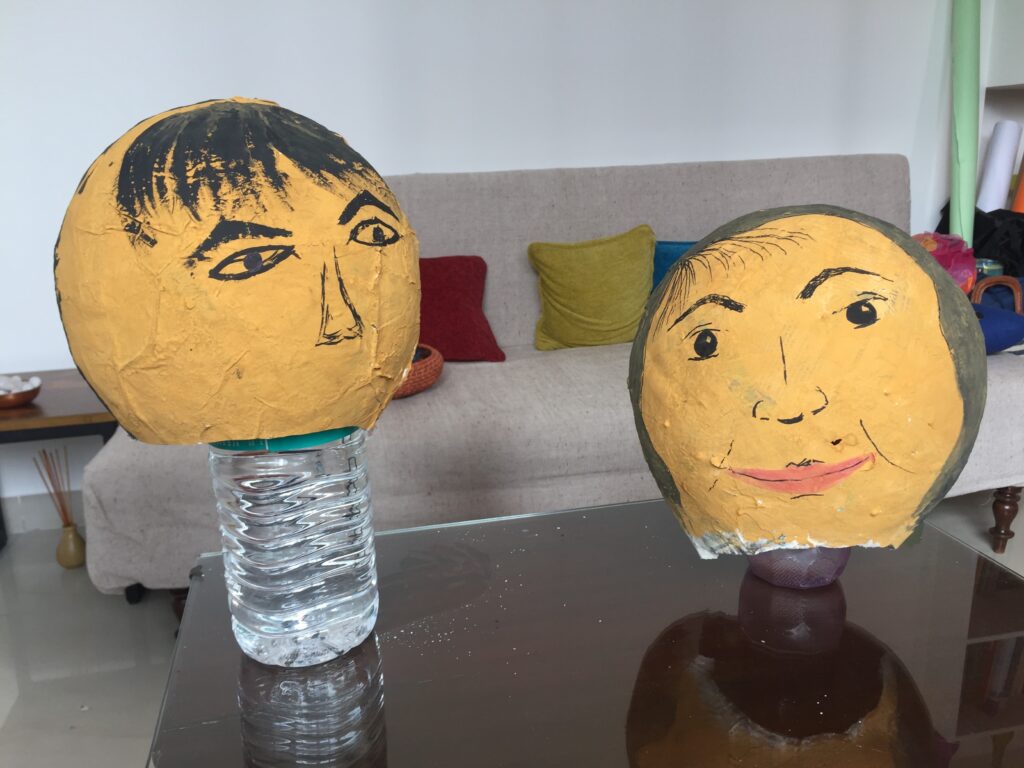
Arts-Based Therapy (ABT) is the use of art forms in healing and recovery with a trained professional. ABT as practiced at ARTH is guided by Indian mind traditions.
Both, counselling and ABT are empowering processes that require a collaborative relationship between the client and the professional.
Please note, that we are currently only offering online sessions.
The Therapeutic Process
The process of Counselling and Arts Based Therapy offers a safe space to explore individual issues, build on strengths and capacities, and receive support, thereby facilitating change and growth. The process serves as a space to draw attention to our thinking patterns and our ways of making sense of the world around us, and our own behavior and interactions. This exploration often leads to insight and a deeper understanding of ourselves and our own habits and ways of sense-making, which in turn guide our reactions and responses. The therapeutic process allows for a non-judgmental space that can then lead to exploring new responses and ways of being, which may be in greater alignment with who you want to be/how you want to live.
The duration and frequency of the Counselling and/or ABT sessions are determined by the specific needs and goals of the client. And while counselling and Arts Based Therapy have been shown to be effective in decreasing distress, improving communication and resolving several specific problems, a successful outcome is the result of multiple causes & conditions and can therefore not be guaranteed.
The client-counsellor relationship is a unique one that requires an active commitment from both parties. At ARTH, we are committed to providing a comfortable, supportive and professional environment conducive to insight, healing and personal growth. The commitment required from the client is to identify their goals in counselling and be willing to explore issues related to those goals. This may sometimes require the client to discuss difficult situations or painful emotions.
When might therapy be most helpful?
While there is no fixed prerequisite for starting therapy, our experience suggests it is often most effective when:
- You feel ready to explore aspects of your life that may be causing distress
- A commitment, if not a readiness, to stay with the process, even when it is not easy or immediate
- You can recognise an inner component to your challenges, besides what may be happening externally
- You are open to the relational nature of therapy, and the commitment it involves for both client and counsellor
There is no need for complete clarity—just a willingness to begin.
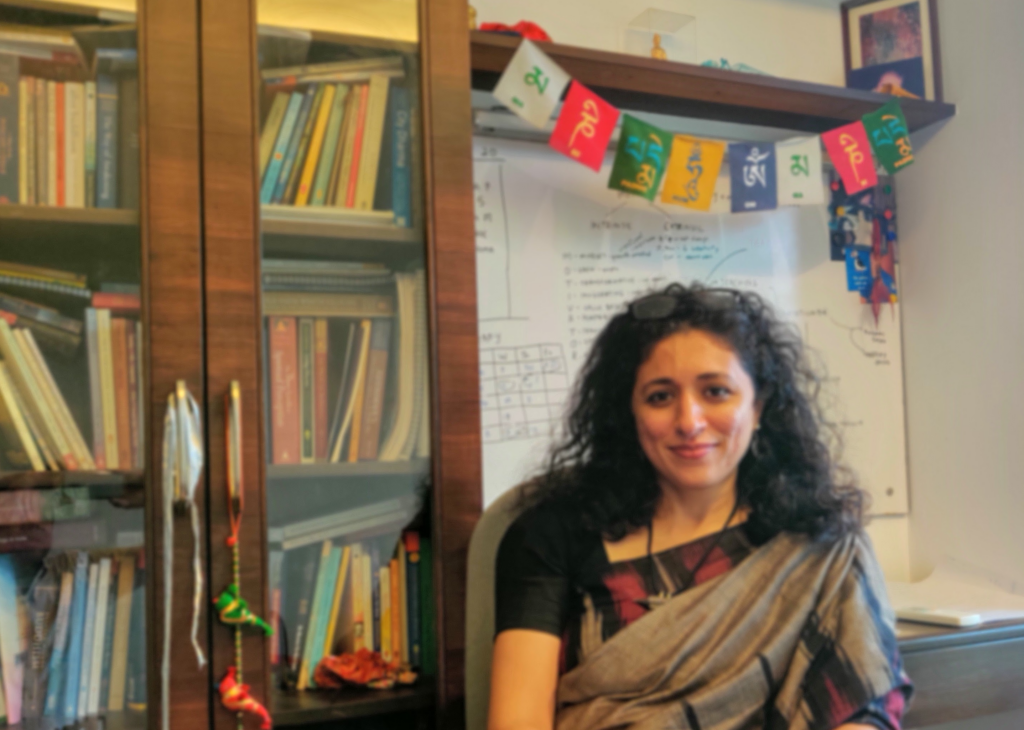
Dr. Nivedita Chalill is a licensed counsellor (UAE & India) and the founder of ARTH, a mental health initiative offering counselling, Arts-Based Therapy, and reflective learning spaces for individuals, groups, and organizations. She is trained in Occupational Therapy (Seth G.S. Medical College, Mumbai) and holds a Master’s in Medical Psychiatric Social Work, along with an M.Phil. and Ph.D. from the Tata Institute of Social Sciences (TISS), Mumbai, where she has also served as faculty. She is a trained Arts-Based Therapist from the WCCLF (Pune), where she also completed the Applied Buddhist Psychology Educators Program. Her work is rooted in Buddhist philosophy, which she continues to study through Tibet House (Cultural Centre of His Holiness the Dalai Lama, New Delhi).
With over 25 years of experience, she has worked across hospitals, academic institutions, community programs, and crisis settings, including suicide prevention and disaster relief. Her approach is trauma-informed and attentive to the layered and changing nature of human experience, integrating psychological understanding, contemplative practice, and creative processes to support a more aware and compassionate engagement with one’s inner life.
She currently practices in Dubai and India. Her courses and retreats in Applied Buddhist Psychology offer a space to explore the nature of mind, emotion, and self, and how cultivating understanding in daily life can support a sense of inner ease.
‘THERAPY‘ or ‘COUNSELLING‘ are popular words today, and that can be both helpful as well as troubling.
So we would like to clarify what we offer, so you have a chance to think about whether this works for you.
Call us ‘old’ fashioned, given that we are trying to follow a path that is 2500+ years old…but our view of a healthy/well-adjusted human is one who, with awareness and mindfulness, is able to move beyond self-centered patterns, relate with compassion and responsibility toward others, remain open and flexible in perspective, and engage wisely with life in a way that benefits both themselves and the larger whole.
(Yes, we realize that is realllllyyyyy ideal, and one that we are also working towards!!)
So the counselling/therapy space is NOT JUST A SPACE FOR SUPPORT – but also one where you will be gently guided/nudge towards this ideal. This takes many forms…sometimes it may mean reflection exercises or some reading, some sharing of experiences, some recommended joint learning spaces like retreats or seminars, etc.
This means that therapy is not always validating and affirming of one’s stories or views, but actually spaces to move a little closer towards the ideal, and learning how to keep moving in that direction, with clarity and compassion.
Q: Will this work for everyone?
A: No, because each of us has different ideas of what therapy/counselling is, or how it should work, and very importantly how we should feel during therapy/counselling…and while those views may be valid, they may not match with what we have to offer.
So, we usually offer a brief consultation (about 30 mins) to help explore this before commiting to this journey.
Support & Availability
We recognize that experiences such as anxiety and emotional distress can sometimes feel overwhelming, and we deeply value your willingness to reach out for support.
At ARTH, our work is primarily structured around scheduled counselling sessions, workshops, retreats, and training programs. As a result, we are unfortunately not able to provide emergency or crisis support.
If you are in need of immediate assistance or feel that you would benefit from speaking with someone urgently, we strongly encourage you to connect with dedicated crisis support services. These organizations are equipped to offer timely and appropriate care in moments of acute distress.
You may consider reaching out to the following helplines:
- Vandrevala Foundation: +91 9999 666 555
- NIMHANS: 080 4611 0007
- Fortis Stress Helpline: +91 8376 804 102
- MPower Minds: 1800 120 820 050
- Kiran Mental Health Helpline: 1800 599 0019
Reaching out in difficult moments can make a meaningful difference.
You deserve timely support, and these services are here to help.